
AI & Customer Experience
The next stage of AI customer service is likely to move beyond isolated chatbots. Instead, AI systems may operate across voice, chat, email and internal agent tools while sharing a common understanding of the customer’s history and current request. Automation may also become more action-oriented. Rather than only writing an answer, an AI system could […]
Customer conversations can contain names, addresses, payment details, health information, account credentials and other sensitive data. When organizations use these conversations to operate or improve AI systems, privacy cannot be treated as a secondary technical issue. Teams should understand what data is collected, why it is needed, where it is stored, who can access it […]
Good automation is not defined by how long it can keep a customer away from a person. It is defined by whether the customer reaches a correct resolution with reasonable effort. This makes escalation one of the most important design decisions in an AI support system. A human handoff may be appropriate when the AI […]
An AI assistant can only be as reliable as the information available to it. When company policies, product information and support procedures are scattered across outdated documents, AI can retrieve inconsistent answers just as easily as a human employee can. A strong knowledge base gives the system a controlled source for answering questions. Articles should […]
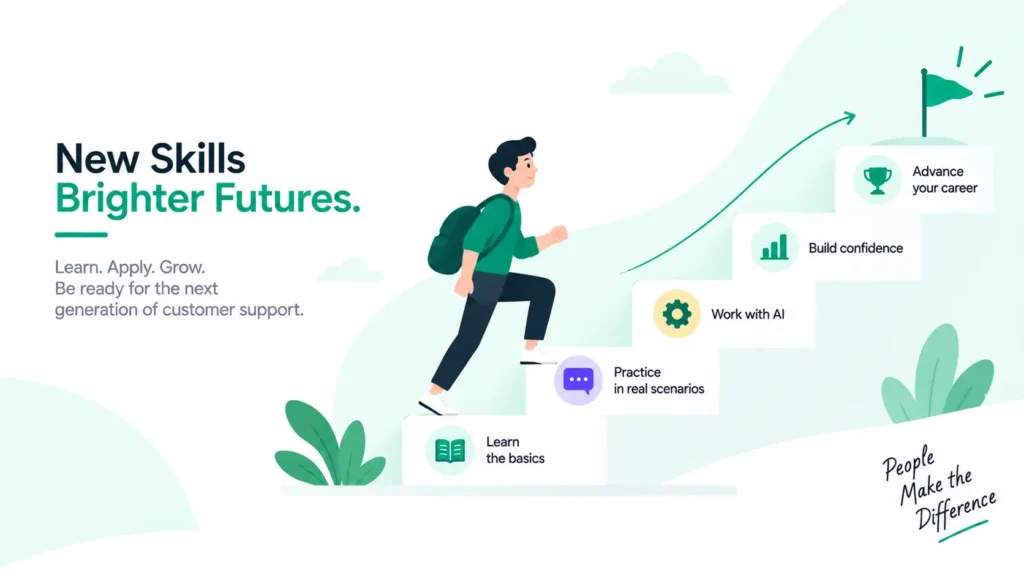
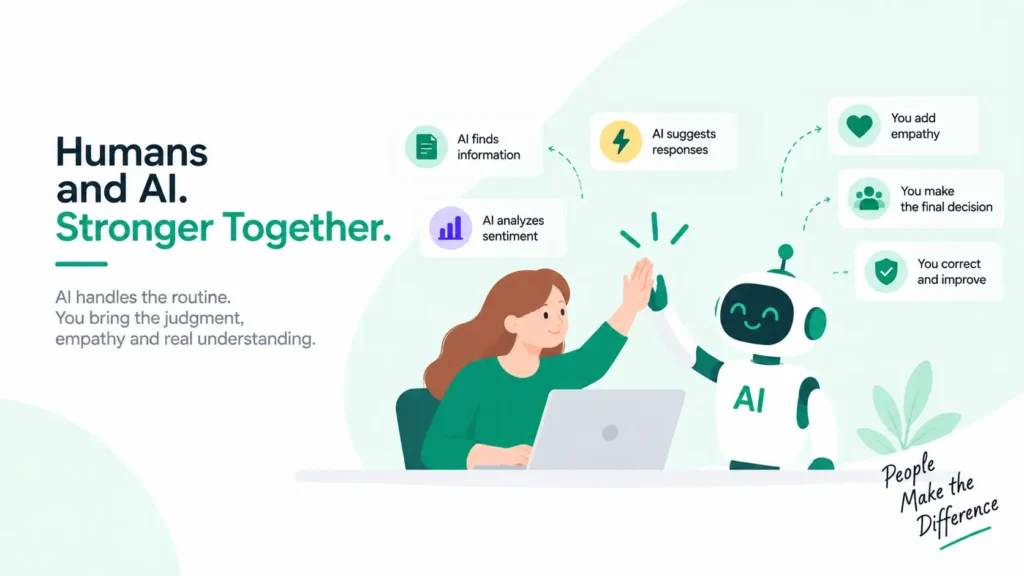
When AI takes over parts of customer-service work, the employee role does not simply disappear; the mix of tasks changes. Repetitive lookup and drafting may decrease, while judgment, exception handling, quality review and system supervision become more important. An agent using AI may spend less time searching several internal pages for an answer. Instead, the […]
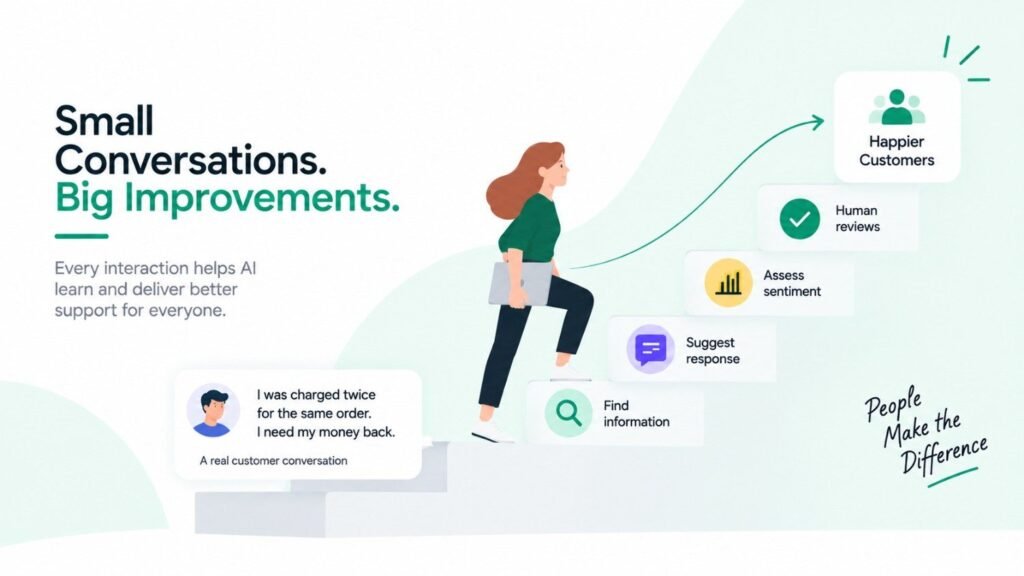
Not every customer conversation is equally useful for improving an AI system. A high-quality training example usually has a clear problem, enough context to understand the situation, a reliable resolution and an indication of what the AI or employee did correctly or incorrectly. Useful examples may include difficult edge cases as well as common requests. […]
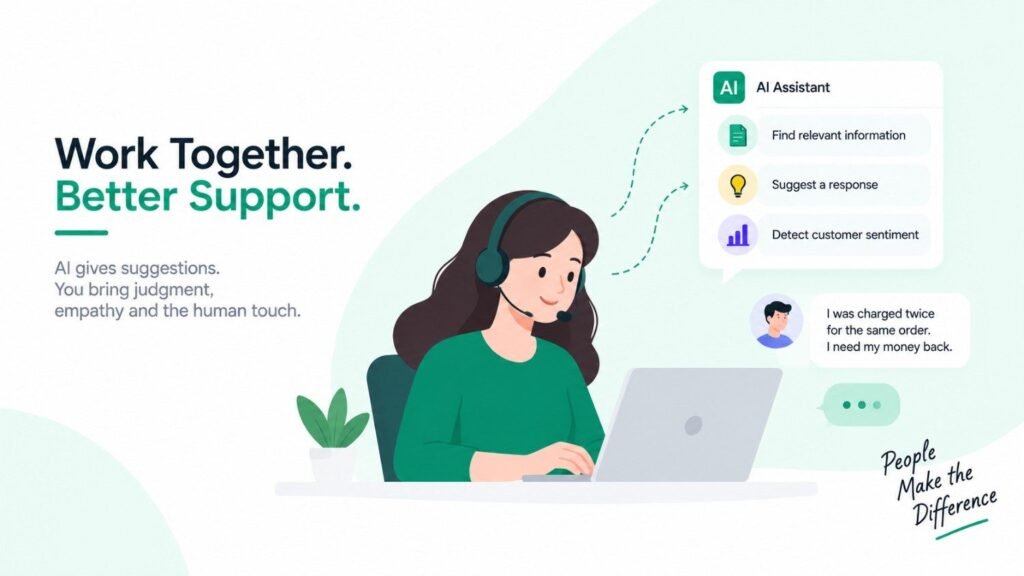
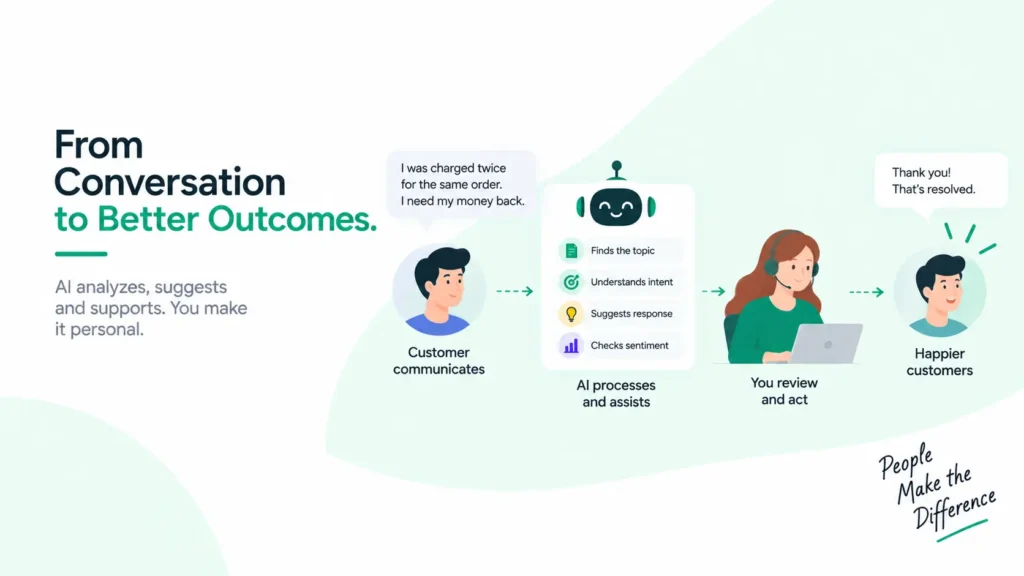
AI customer-service systems often generate several labels for the same conversation. Three of the most common are intent, sentiment and escalation risk. They describe different things and should not be treated as interchangeable. Intent is about what the customer is trying to accomplish, such as changing an address, cancelling a subscription or disputing a charge. […]
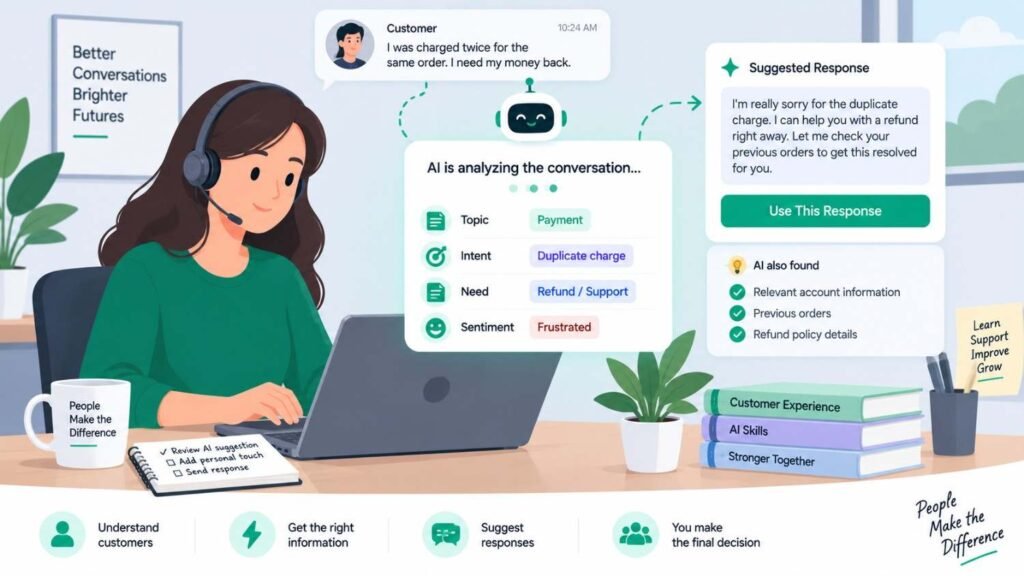
Evaluating an AI-generated response requires more than checking grammar. A useful review framework considers whether the answer is correct, relevant, complete, compliant with policy, appropriate in tone and genuinely helpful to the customer. Accuracy comes first. The response should not invent account details, policies or actions. Relevance asks whether it addresses the customer’s actual intent […]
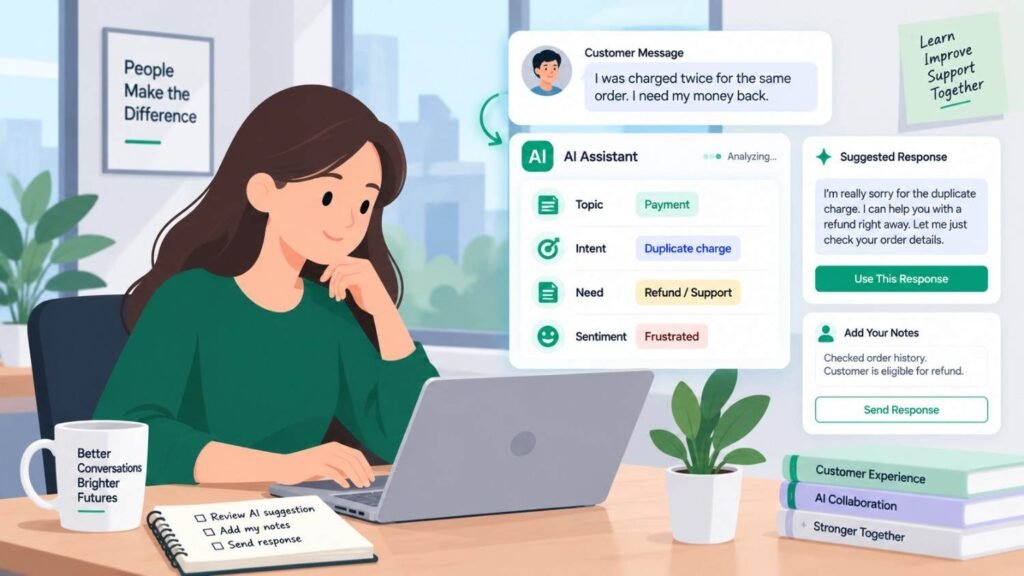
One of the most important lessons in working with generative AI is that a confident-sounding answer is not the same as a correct answer. Language models are designed to generate likely sequences of language. They can produce clear, professional responses even when a detail is missing, outdated or incorrect. In customer service, this matters because […]
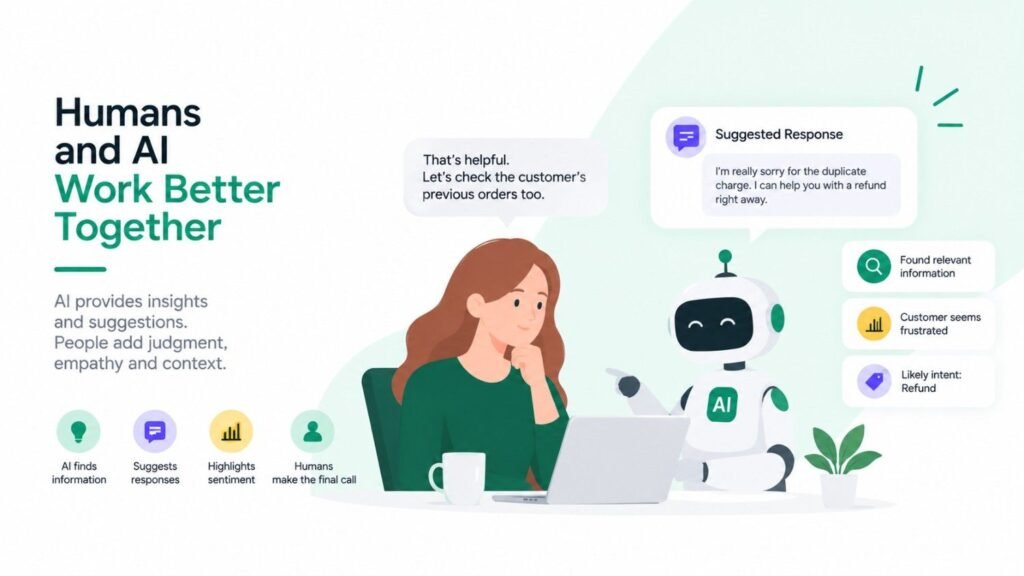
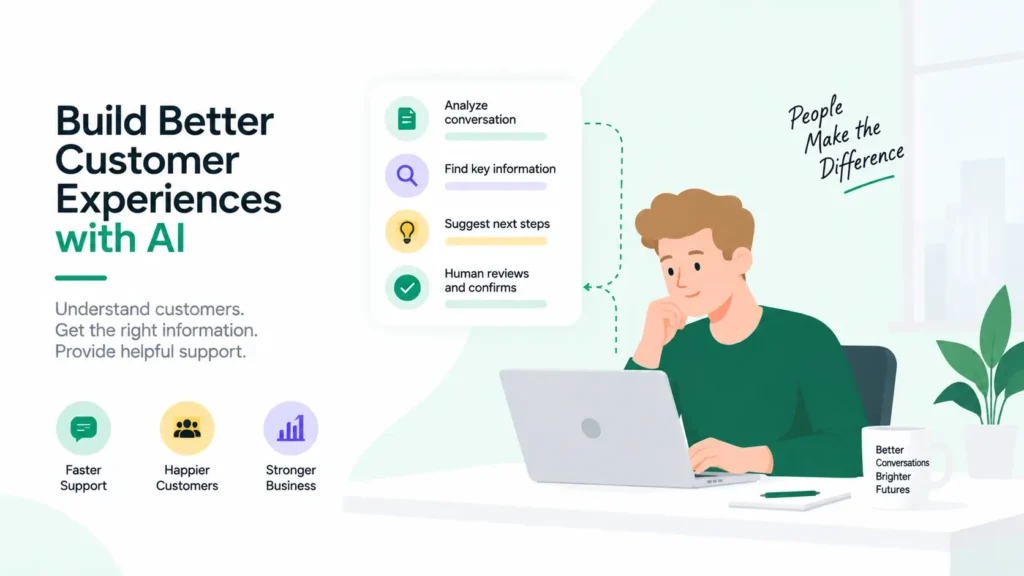
The phrase “human in the loop” describes a system in which AI performs part of a task but people remain involved in reviewing, correcting or approving important decisions. Customer service is a natural environment for this model because conversations combine repetitive work with unpredictable human situations. An AI assistant may classify the request, search a […]